How to Choose Between Multiple 5-Star Hotels in One City
When a city holds four or five genuinely 5-star hotels, you are no longer choosing on quality — every property on the shortlist will have the rooms, the restaurants, the spa and the staffing. You are choosing on fit, and fit is decided in a fixed order: neighbourhood first, because location is the only variable no upgrade, no credit and no apology can change once you have arrived; then the house style — a grand dame, a contemporary tower and a garden retreat are three different holidays, not three prices for the same one; then the room category you will actually book, compared like for like rather than against the hotel's best photograph; then what the trip is for; and only at the end, when two finalists are genuinely equal, what each hotel attaches to the booking. Worked in that order, the decision usually makes itself by the third step. This guide takes each filter in turn, with examples from Kyoto, London, New York and Venice, and builds on our guides to the best 5-star hotel locations for different types of travellers and the questions to ask before booking a 5-star hotel.
Compare 5-Star Hotels With Perks on WhataHotel
Start With the Neighbourhood, Not the Hotel
Every other factor here can be negotiated, upgraded or forgiven. Location cannot: a hotel two miles from where you intend to spend your days costs two taxi rides a day for the length of the stay. Begin by drawing the trip on a map — the restaurant booked months ago, the museum, the office, the station you arrive at — then look at which hotels sit inside it. In New York the same budget buys Four Seasons Hotel New York or Aman New York on 57th Street, in the middle of Midtown's shopping and theatre traffic, or The Carlyle twenty blocks north at Madison Avenue and 76th, where the Upper East Side is residential, the museums are a walk away and the noise stops at night — a different city on the same island. In London, Rosewood London sits on High Holborn, deliberately between the West End and the City, which suits a trip mixing theatre with meetings; The London EDITION on Berners Street puts you in Fitzrovia, minutes from Soho. In Japan the gap is starker still: The Ritz-Carlton, Kyoto stands on the Kamogawa in the centre, walking distance from Gion and Pontocho, while Aman Kyoto lies about thirty minutes by car north in Takagamine, in a private garden at the foot of Mount Hidari Daimonji. Both are superb. Only one of them lets you finish dinner in Gion and walk home.
Read the House Style: Grand Dame, Modern Tower or Retreat
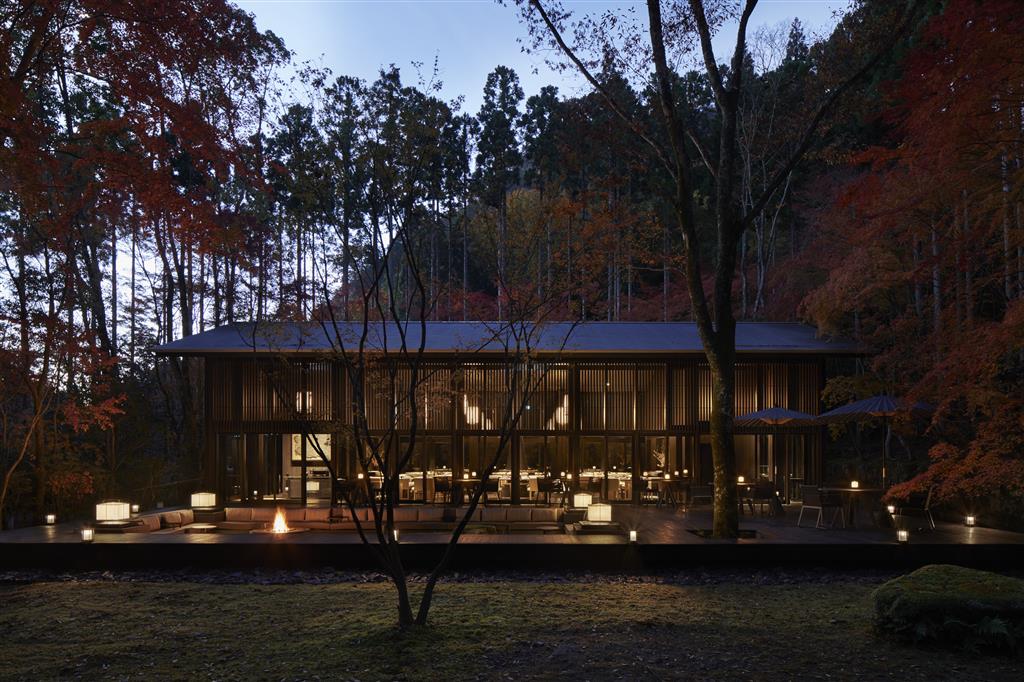
Once the map has cut the list, the next filter is character — the one travellers most often skip, which is why people who booked correctly on paper still come home saying the hotel "wasn't them". Luxury properties divide roughly into three temperaments. The grand dame trades on history and ritual: a listed building, a bar the city's own residents drink in, staff who have been there twenty years. The Carlyle is the archetype, with 192 rooms including 92 suites, Ludwig Bemelmans's murals in the bar that carries his name and a cabaret room next door; Rosewood London does the same in the Edwardian Belle Époque pile that was Pearl Assurance's headquarters from 1914 until 1989. The contemporary property trades on space, light and engineering: Aman New York occupies the landmarked Crown Building at Fifth Avenue and 57th with 83 suites and a spa across three floors built around a 20-metre pool and ten treatment rooms. The retreat trades on removal: Aman Kyoto's 26 rooms, suites and pavilions in a moss-and-maple garden with an onsen bathhouse fed by natural hot spring are a decision to leave the city rather than live in it. None is better than the others, but a traveller who wants Bemelmans at eleven at night will be restless in a silent garden, and one who wants the garden will find Midtown exhausting. Decide which of the three you are before comparing rates.
Compare the Room You Will Book, Not the Hotel's Best Photograph
Hotels are marketed by their suites and judged by their entry categories, and the gap between the two is where most disappointing luxury stays begin. Put the finalists side by side at the level you will pay for, and compare four things. Floor area first: genuine 5-star city rooms start around 40 to 45 square metres — The Ritz-Carlton, Kyoto opened with entry-level rooms of roughly 45, the largest base accommodation in its city — and anything under about 35 in a city is not luxury-class whatever the finish. View, named precisely, second: a "Kamogawa River View" room faces the river and a garden-view room does not, and no goodwill at check-in creates frontage that was never in the category. The bathroom and layout third — separate tub and walk-in shower, double vanity, a seating area that is usable rather than a chair by the window. Outdoor space fourth, where properties separate sharply: at Mandarin Oriental Jumeira, Dubai all 256 rooms and suites carry a balcony or terrace, while plenty of equally rated city hotels have none at any price. Then run the same exercise on what you will use daily: how many restaurants the hotel operates and whether any hold external recognition, whether the pool and thermal circuit are open to all guests, whether connecting rooms exist. Two hotels with identical star counts can differ by a full category of room and two restaurants — all of it public before you book.
Match the Hotel to What the Trip Is Actually For
The last substantive filter is purpose, which resolves most remaining ties. A first visit argues for the centre and for a property whose address is part of the sightseeing: The St. Regis Venice's Grand Canal frontage facing the Salute is a view you would otherwise queue for. A fifth visit argues the opposite — buy the thing the city cannot sell you twice, like Aman Venice's 24 suites in the sixteenth-century Palazzo Papadopoli, with Giandomenico Tiepolo's 1780s fresco cycle in the reception rooms and two private gardens in a city that has almost none. A business trip weights proximity to the meeting, a working desk, fast check-in and a bar you can take a client to. A romantic trip weights the room and the quiet, and usually justifies moving up a category rather than moving hotels. A family trip weights connecting rooms, pool hours and a kids' club, and quietly rules out the beautiful small palazzo. A food-led trip follows the kitchens: Bulgari Hotel Roma pairs its fifth-floor Il Ristorante with a rooftop terrace, while The Ritz-Carlton, Kyoto splits its Japanese offering across four Mizuki rooms. Write down the one sentence that explains why you are going; the hotel that answers it is the booking.

The Tiebreaker: What Each Hotel Attaches to the Booking — and How WhataHotel! Fits
Sometimes two finalists survive every filter. The honest tiebreaker then is not the nightly rate but the total value attached to the reservation — decided by the channel you book through, not the hotel. Booked through WhataHotel! — operated by Lorraine Travel, a luxury advisory in business since 1948 — every property comes through the brands' invitation-only preferred-partner programmes: Marriott STARS, Belmond Bellini Club, Hyatt Privé, Rosewood Elite, Four Seasons Preferred Partner, Mandarin Oriental Fan Club and IHG Destined. Each reservation carries daily breakfast for two, a US$100-plus property or spa credit (US$200 for suites at properties including The Ritz-Carlton, Kyoto), upgrade priority at check-in — the mechanism that turns a city-view room into the river-view room you compared earlier — early check-in and late checkout where available, and VIP recognition, all at the same flexible rate as booking the hotel direct, with no minimum stay. The effect on a two-hotel decision is twofold. The packages are not identical between properties, so the comparison is worth running: a hotel whose credit applies at the spa and whose breakfast is à la carte is better value than one whose credit is food-and-beverage only. And an advisor who books both hotels every month answers what the websites will not — which side of the building is quiet, whether the entry category genuinely upgrades in that season, how far the walk really is at night. That is the difference between choosing a hotel and choosing the right room in the right hotel, for the same money.