5-Star Hotel Dining: What to Expect at Their Restaurants
Expect two to five separate restaurants with separate kitchens, a breakfast that is often the best meal of the day, in-room dining around the clock, and at least one flagship room good enough that people who are not staying at the hotel book a table in it — priced at the city's fine-dining level rather than at some softer "hotel restaurant" level. That last point is the one that surprises people: a 5-star hotel's dining is not a captive-audience convenience with a captive-audience menu, it is a set of standalone restaurants that happen to share a lobby, and at the top of the class they carry Michelin stars in their own right. Otto Geleng at Belmond Grand Hotel Timeo holds a star in the 2026 Michelin Guide Italia across eight tables on a bougainvillea terrace facing Etna; Caruso's at Rosewood Miramar Beach has held both a Michelin Star and a Green Star for five consecutive years; Tasca by José Avillez at Mandarin Oriental Jumeira, Dubai carries a star on the sixth floor. This guide covers what the restaurant line-up actually contains, what the flagship is and is not, what breakfast and room service really cost, the practical rules nobody explains at check-in, and how the booking channel changes the bill. It builds on what 5-star amenities you should actually expect and the hidden costs at 5-star hotels.
Book a 5-Star Hotel With Breakfast Included
What a 5-Star Restaurant Line-Up Actually Contains
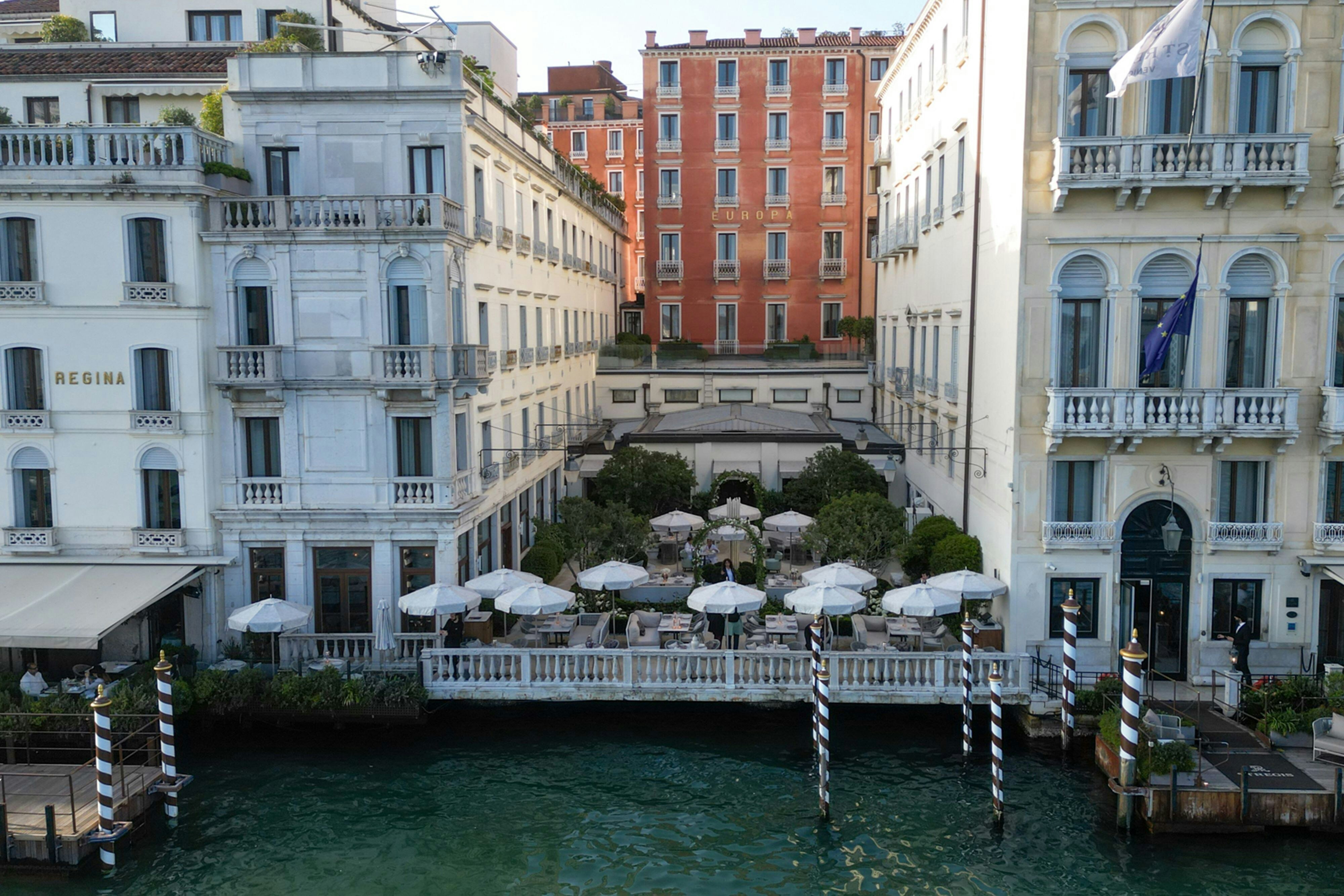
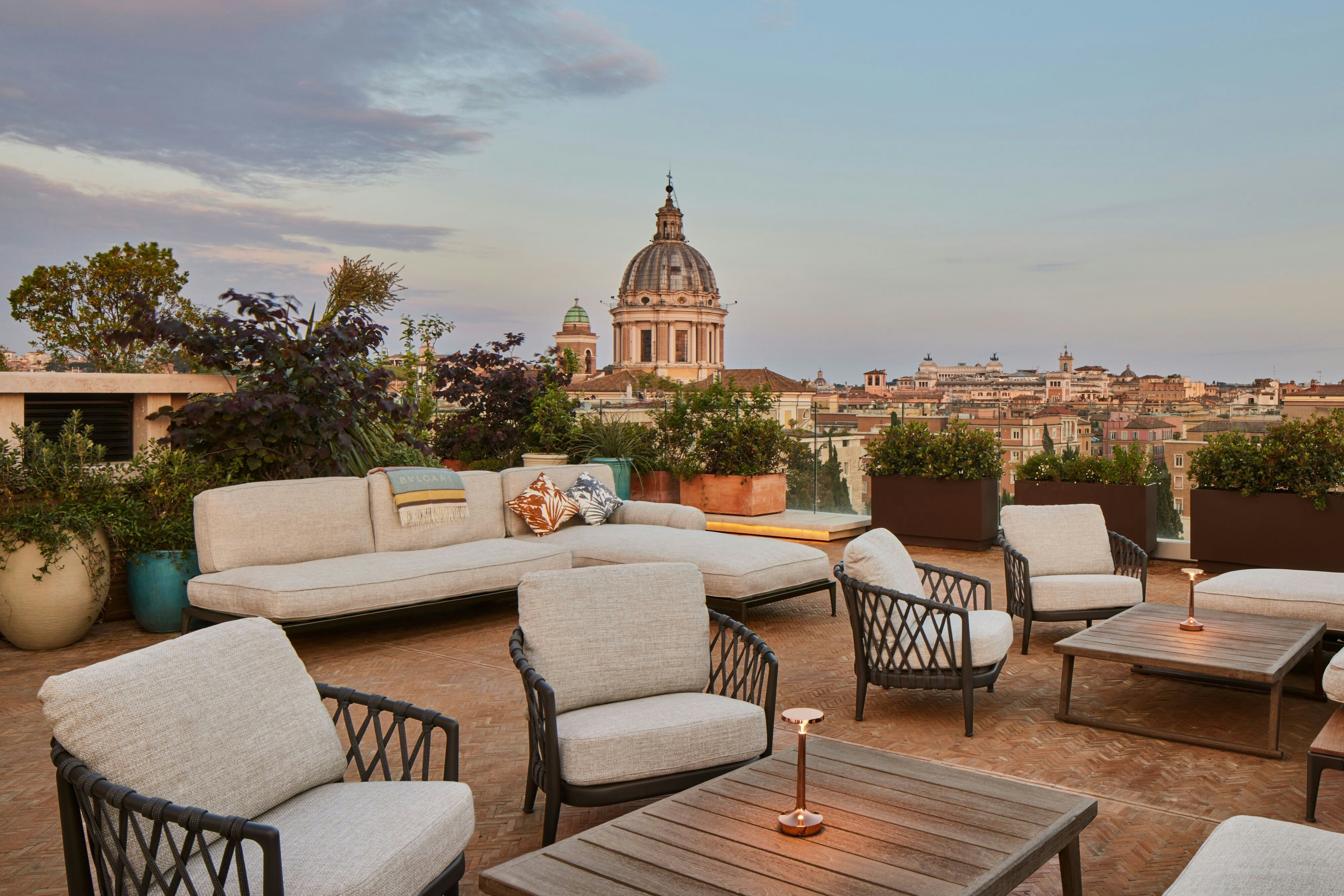
The count is the giveaway. A four-star hotel typically runs one restaurant that changes hats three times a day — breakfast buffet, lunch menu, dinner menu, one kitchen, one team. A genuine 5-star runs several rooms with their own kitchens, their own chefs, and their own identities, because each is expected to stand on its own. The all-day room handles breakfast and lunch and usually opens onto the best outdoor space the building has. The flagship opens for dinner only, seats fewer people, and is where the hotel spends its culinary reputation. The bar is a serious operation in its own right, often with a kitchen behind it and, in city hotels, a rooftop. A specialist room covers one cuisine properly rather than adding it to a general menu — a Japanese counter, a grill, a trattoria. And in-room dining runs from a kitchen that never closes. The Ritz-Carlton, Kyoto splits its Japanese offering into kaiseki, tempura, sushi and teppanyaki rooms under the Mizuki name and runs La Locanda separately for Italian; Bulgari Hotel Roma pairs its fifth-floor Il Ristorante with a rooftop bar and terrace. The test is not how many logos appear on the dining page. It is whether each room has a kitchen and a chef of its own, and whether any of them would survive on a normal street with no hotel attached.
The Flagship: What "Michelin-Starred Hotel Restaurant" Really Means
A star inside a hotel is earned the same way as a star on a street corner, which is precisely why it matters as a signal: the guide does not grade the bedrooms, the lobby, or the brand. What a star tells you is that a hotel has committed to a level of sourcing, brigade size, and consistency that costs real money and cannot be faked for a season. Otto Geleng at Belmond Grand Hotel Timeo runs just eight tables under chef Roberto Toro, with Sicilian cooking reinterpreted across tasting menus and a terrace looking over the Bay of Naxos and Mount Etna. Caruso's at Rosewood Miramar Beach sits directly above the sand under chef-partner Massimo Falsini and has retained its Michelin Star and Michelin Green Star — the sustainability distinction — for five consecutive years, at a hotel that also holds a Forbes Triple Five-Star rating for a third year running. Il Ristorante – Niko Romito occupies the fifth floor of Bulgari Hotel Roma with a terrace facing the Mausoleum of Augustus and a mahogany-panelled dining room, delivering the pared-back Italian cooking of a chef who holds three stars at his own restaurant. Tasca by José Avillez at Mandarin Oriental Jumeira, Dubai was the Portuguese chef's first international opening after Belcanto in Lisbon. Two honest caveats. First, a starred room is not automatically the best meal of your stay — the bar menu or the all-day terrace is often the one you remember. Second, the flagship almost never serves breakfast, so the kitchen you meet at 8 a.m. is a different team from the one you met at 8 p.m.
Breakfast, Room Service, and What Dining Actually Costs
Here is where budgets go wrong. Breakfast is rarely included at this tier unless your rate or your booking channel says so, and at a luxury property it runs roughly US$40 to 90 per person — call it US$80 to 180 a day for two, which over three nights is more than many people spend on a room somewhere else. It is also, genuinely, the meal these hotels do best: à la carte cooked to order, proper pastry, and a room that is never rushed. In-room dining is the most reliably under-estimated line on the folio, because the menu price is only the start — expect a service charge in the 10 to 20 percent range, a separate tray or delivery fee, sometimes a surcharge outside standard hours, and tax on top of all of it. The flagship prices like the city's other fine-dining restaurants, because that is what it is competing with. And the numbers say most guests get this backwards: Cornell research by Chekitan Dev and Prateek Kumar, tracking 724 guests across 33 hotels, found that about half of guests expected to eat dinner in the hotel restaurant and only around 9 percent did, while in-room dining at lunch went the other way — roughly 11 percent expected it and about 32 percent actually ordered it, rising to half of guests on stays of five nights or more. People plan for the grand dinner and end up ordering a club sandwich on the terrace. Budget accordingly: breakfast and room service are the spend that is actually coming.
The Practical Rules Nobody Explains at Check-In
Six things worth knowing before you sit down. Reservations: being a house guest does not guarantee a table in the flagship — starred rooms at small hotels can seat two dozen people a night and fill weeks ahead, so book the restaurant when you book the room, not on arrival. Non-guests: the good ones are open to the public, which is the point; it also means you are competing with the city for the 8 p.m. slot. Dress codes persist at the flagship — a collared shirt and closed shoes, no swimwear, no beachwear after dark — while the all-day room and the bar have relaxed almost everywhere, part of a broader move away from jacket-and-tie enforcement. Children: most flagships have no formal age limit but do have an unspoken one; the all-day restaurant, the bar and in-room dining are where families are genuinely comfortable, and a good hotel will say so plainly if you ask. Half board and dining credits: read what they exclude, not what they include — premium wines, the specialist room, minibar and in-room dining are frequently outside the package, and a "resort credit" often cannot be split across a stay or carried to the next day. And the concierge: at this tier the restaurant desk books tables outside the hotel as readily as inside it, including places with no public availability left, which is one of the most valuable and least-used services in the building.
How the Booking Channel Changes the Bill — and Where WhataHotel! Fits
The single largest variable in a luxury hotel's dining bill is not the menu. It is whether breakfast and a food-and-beverage credit were attached to your reservation before you arrived. The brands' invitation-only preferred-partner programmes — Marriott STARS, Belmond Bellini Club, Hyatt Privé, Rosewood Elite, Four Seasons Preferred Partner, Mandarin Oriental Fan Club, IHG Destined — do exactly that, at the hotel's own flexible rate, the same price as booking direct: daily breakfast for two (roughly US$80 to 180 a day, recovered before you order anything), a US$100-plus property or spa credit that most hotels will let you spend in the restaurants, upgrade priority, early check-in and late checkout where available, and VIP recognition — which, at a hotel with one starred room and twenty tables, is the difference between the 8 p.m. slot and the 9:45. Across three nights that is typically US$400 to 700 of value with no minimum stay. Booked through WhataHotel! — operated by Lorraine Travel, a luxury advisory since 1948 — your advisor also requests the reservations before you travel, flags the flagship's closed days and seasonal closures, and notes preferences and allergies on the booking so the kitchen has them in advance. Order whatever you like once you are there. Just make sure breakfast and the credit are already on the reservation before you go.