Do All 5-Star Hotels Have the Same Standards?
No — and the gap inside the 5-star band is wider than the gap between four stars and five. "Five-star" is not one standard but a dozen of them: a hotel can carry the grade because an Italian region confirmed it has a 24-hour reception, three languages at the desk, and a double room of roughly 16 square metres; because Dubai's tourism department licensed it at that band; because a European catalogue of 239 published criteria scored it past a points threshold; or — in the United States, Japan, and much of the world — because it simply decided to call itself that. At the far end of the same band sit the 343 hotels holding a Forbes Travel Guide Five-Star rating for 2026, out of 2,422 properties recognised across more than 100 countries, where entry rooms run 40 to 45 square metres, restaurants hold Michelin stars, and butlers are attached to every category. Both ends print five icons on the booking page. This guide explains what the five-star floor actually requires in each major system, what the top of the band delivers, why two hotels flying the same brand flag can differ sharply, and the checks that tell you which end you are booking. It builds on what the difference between hotel star ratings really is and our 4-star versus 5-star comparison.
Browse Verified 5-Star Hotels on WhataHotel
Why the Same Five Stars Cover Wildly Different Hotels
Three variables stack up, and each one widens the band. First, which system awarded the stars. Some are government classifications with legal force, some are harmonised regional catalogues, some are inspection ratings earned in person, and some are nothing at all — a self-declared number typed into a booking platform's admin panel. Second, what that system measures. Official classifications almost universally score the presence of facilities: a spa exists, a restaurant exists, the reception is staffed around the clock. They rarely score whether the spa is any good, whether the restaurant is worth eating in, or whether the person at the desk at 3 a.m. can do anything useful. Inspection bodies such as Forbes Travel Guide and AAA do the opposite — they send anonymous inspectors to test execution, which is why their ratings sit on top of, rather than instead of, a national grade. Third, where the property sits inside its own band. A classification is a floor, not a score: once a hotel clears the fifth-star threshold there is no ceiling and no further distinction, so the property that scrapes over the line and the property that clears it by a mile publish the identical rating. That is the whole answer to the question. Stars tell you what a hotel is obliged to provide under one particular rulebook. They tell you almost nothing about how far past that obligation it goes.

The Floor: What "Five Stars" Legally Requires, System by System
Read the actual rulebooks and the variation is startling. Europe's Hotelstars Union is the most transparent: a shared catalogue of 239 criteria, mandatory across its 21 member countries — Germany, Austria, Switzerland, the Netherlands, Belgium, Denmark, Sweden, Greece, Malta and others — and fixed for the 2025 to 2030 period, with five stars requiring a genuine 24-hour reception, 24-hour room service, concierge, valet, turndown, and laundry. Italy classifies regionally, which means the checklist a Venetian hotel meets is not identical to the one a Sicilian hotel meets; the national framework set out in the 2008 decree pegs the five-star floor at a 24-hour reception, three languages at the desk, and a double room of about 16 square metres — a quarter the size of what the market's real luxury hotels deliver — with a separate 5-star L (lusso) band above. France's Atout France grades one to five stars against a published grid, revalidated every five years, and reserves the official "Palace" distinction above five stars for a deliberately tiny group: 33 hotels for 2026, after the programme's first full reassessment in seven years renewed 27 and admitted six. Dubai's Department of Economy and Tourism licenses every hotel in the emirate by band, one to five stars plus a budget tier, and adds Gold and Platinum "Accolades" to mark properties operating beyond the fifth star. And then the blanks: Japan has no government star system whatsoever, and neither does the United States. In those markets the number on the booking page came from the hotel or from an algorithm — not from an inspector, and not from a law.
The Ceiling: What the Top of the Band Actually Delivers
Now the other end. Forbes Travel Guide's 2026 Star Awards recognise 2,422 properties across more than 100 countries, of which only 343 are Five-Star hotels — the closest thing to a global luxury benchmark, earned through anonymous inspection of hundreds of exacting standards with the weighting on service rather than furniture. AAA's Five Diamond designation performs the same job in North America and the Caribbean, sitting at the top of an inventory of more than 28,000 Diamond-designated properties. What those hotels deliver against a 16-square-metre legal floor is a different product entirely: The Ritz-Carlton, Kyoto opened with entry-level rooms of roughly 45 square metres, the largest in its city; Park Hyatt Sydney and The St. Regis Venice attach butler service to every room category rather than to suites alone; Bulgari Hotel Roma runs its dining under Niko Romito, Belmond Grand Hotel Timeo holds a Michelin star at Otto Geleng, Rosewood Miramar Beach at Caruso's, and Mandarin Oriental Jumeira, Dubai serves Tasca by José Avillez; Six Senses Fiji runs a resort-scale sustainability and wellness programme that no classification grid contains a line for. None of this is required by any five-star rulebook on earth. All of it is what the top of the band chooses to do — which is precisely why the badge cannot tell the two ends apart.
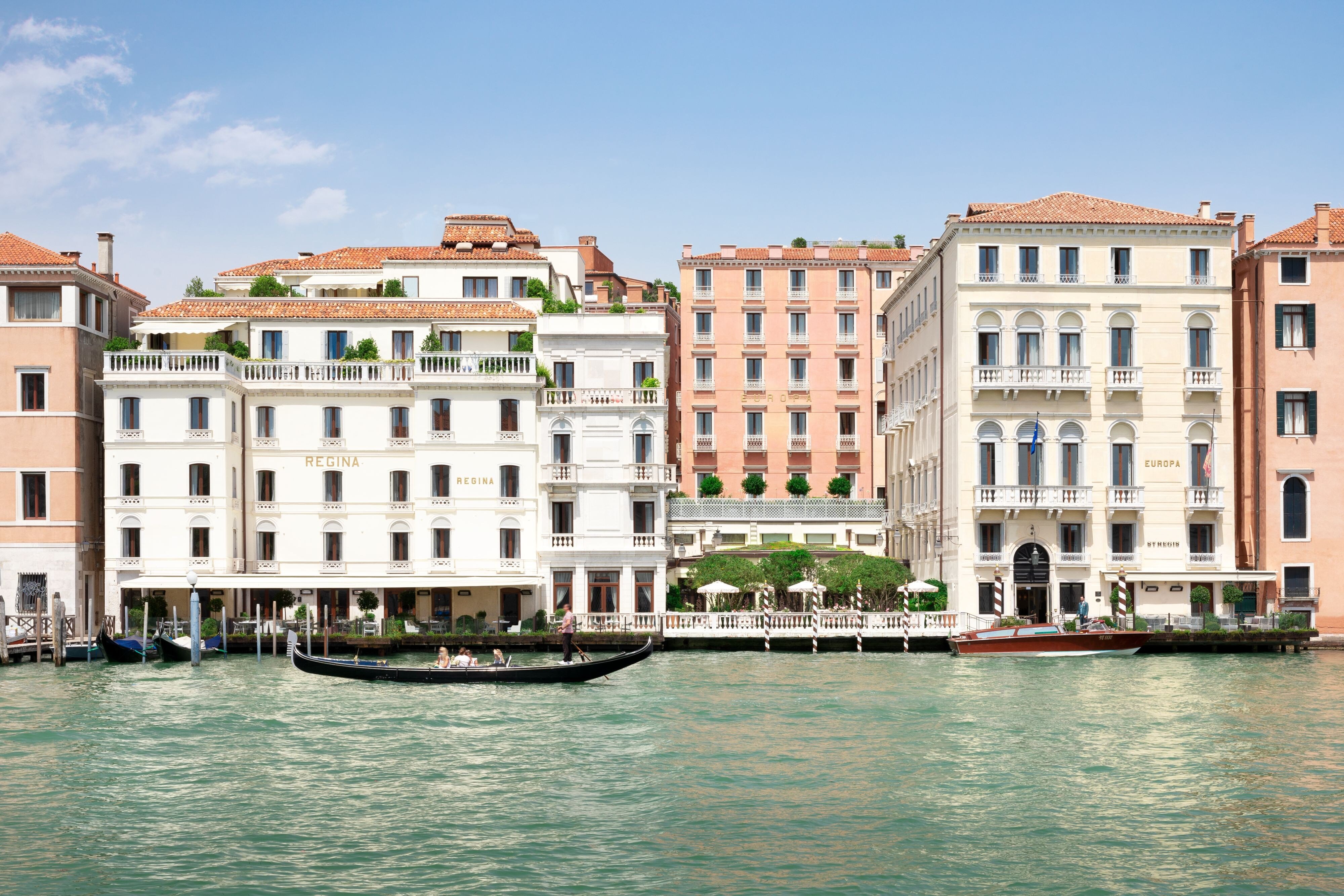
Same Flag, Different Hotel: Why One Brand's 5-Stars Vary
Even inside a single luxury brand, no two properties are identical, and the reasons are structural rather than sloppy. Building type is the biggest: a purpose-built hotel can design 45-square-metre rooms from the foundations, while a heritage conversion in a protected Venetian palazzo or a Sicilian clifftop villa works with room shapes that were fixed centuries ago — which is why the finest historic hotels compete on terraces, frescoes, and position rather than square metres. Format is next: a city hotel is judged on the concierge desk, the bar, and the speed of a 7 a.m. departure, a resort on pools, kids' clubs, water sports, and multi-restaurant depth — the same brand standards produce very different buildings. Ownership and operating structure matters more than guests realise: most luxury hotels are owned by third parties and merely managed under the brand, so the owner's willingness to fund the renovation cycle, the staffing budget, and the F&B partnership decides how far above the brand's minimum a property runs. Local labour economics follow from that — the staffing density that makes anticipatory service possible costs very different amounts in Kyoto, Rome, Dubai, and California. And time since renovation quietly outranks all of it: a flagship four years past its refurbishment can feel a full tier below a sister property that closed last winter for a rebuild. The brand guarantees a floor of standards. The specific property decides the ceiling.
How to Compare Two 5-Star Hotels Before You Book — and Where WhataHotel! Fits
Five checks separate the ends of the band in about ten minutes. One: identify which system issued the stars — an official classification, an inspection rating, or nobody — and treat classification as a floor and Forbes or AAA as the measure of quality within it. Two: read the entry-level room's published square footage on the hotel's own site rather than the category name; this is the single most revealing number a luxury hotel publishes. Three: count the restaurants and look for external recognition — a Michelin star or a serious chef partnership is a staffing and sourcing commitment a hotel cannot fake. Four: check the last renovation date and which floors or wings it covered. Five — the industry's own filter: check whether the property books inside an invitation-only preferred-partner programme. Those programmes are where the practical answer to this whole question lives. Every property on WhataHotel! — operated by Lorraine Travel, a luxury advisory since 1948 — is admitted to Marriott STARS, Belmond Bellini Club, Hyatt Privé, Rosewood Elite, Four Seasons Preferred Partner, Mandarin Oriental Fan Club, or IHG Destined, and the brands extend those programmes only to properties operating at the top of the band, because every booking made through them carries benefits the hotel must be staffed to honour: daily breakfast for two, a US$100-plus property or spa credit per stay, upgrade priority, early check-in and late checkout where available, and VIP recognition — at the hotel's own flexible rate, the same as booking direct, with no minimum stay. Stars are a legal floor that varies by country. Programme membership is a brand telling you which of its own hotels clears that floor by the widest margin — and it comes with the better room attached.