Are 5-Star Hotels Really Worth the Money?
A 5-star hotel is worth the money when the hotel is part of the trip rather than a place to sleep between other things — and when you will actually use what the rate buys: the 24-hour service layer, the multiple restaurants, the spa and pool programme, and the space. For a transit night, a conference stay, or a city break spent entirely outside the building, the fifth star is largely theoretical and a strong 4-star delivers most of the usable value at a materially lower rate. The honest arithmetic has three parts: cost per waking hour on property (a US$900 room used for eight sleeping hours costs more per hour than the same room used for a full resort day), the replacement cost of what's included (a well-booked 5-star stay arrives with US$400 to 700 of breakfast, credits, and upgrades that would otherwise be bought separately), and the value of reliability — the anticipatory service and fast recovery that make a 5-star the safest place to spend an occasion that cannot be repeated. This guide runs that arithmetic properly, names the situations where luxury genuinely underperforms, and shows the one variable that flips the answer more often than any other. It builds on our comparison of 4-star versus 5-star hotels and our guide to getting the best rate at a 5-star hotel.
See What 5-Star Rates Include on WhataHotel
What the Extra Money Actually Buys
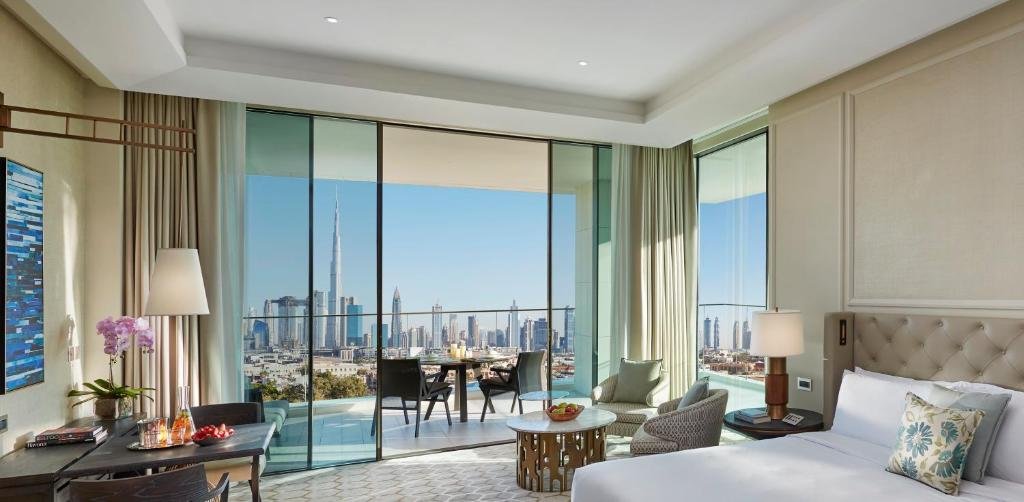
The premium over a good 4-star hotel is not paying for prettier rooms; it is paying for a cost structure. A genuine 5-star runs between one-and-a-half and three staff per occupied room, keeps its kitchens, concierge, housekeeping response, and engineering staffed around the clock, services each room twice a day, and maintains several restaurants with separate brigades instead of one all-day dining room. It builds larger — entry-level rooms from roughly 40 square metres in cities — with stone bathrooms and materials that survive scrutiny, and it finishes the product with things that are only visible when you need them: a real spa with a thermal circuit, a staffed pool, a doorman who has read the arrivals list, a concierge who solves the restaurant problem rather than handing it back. The rate also buys position: a 5-star's location is frequently irreplaceable — Park Hyatt Sydney's water-line seat between the Harbour Bridge and the Opera House, The St. Regis Venice's canal frontage facing the Salute, The Ritz-Carlton, Kyoto's stretch of the Kamogawa — and no amount of 4-star competence puts you there. What you are paying for, in short, is the property's ability to deliver on a bad day at three in the morning, plus a view that cannot be built elsewhere.
The Arithmetic: Cost per Hour, Replacement Value, and Overlap
Three calculations settle most cases. Cost per waking hour on property. Count the hours you will spend awake inside the hotel across the stay — breakfasts, pool afternoons, spa visits, dinners, evenings on the terrace. Divide the rate premium over your realistic alternative by that number. Below roughly ten waking hours across the whole stay, the premium is buying very little you will experience; above it, you are paying for something you use daily, and at resort-style stays of three nights or more the per-hour cost of luxury often drops below what a good restaurant charges per hour. Replacement value. Price what you would buy anyway: breakfast for two (US$80 to 180 a day at this tier), an airport transfer, a spa treatment, a room-category upgrade for an occasion. If those arrive included with the reservation — as they do through a brand preferred-partner booking — the effective rate premium shrinks by several hundred dollars before the comparison even begins. Overlap. Luxury and upper-upscale pricing overlap heavily. A 4-star in peak season frequently costs more than a 5-star in its shoulder season, and a tired grande dame can charge more than a sharp new luxury opening. The tier question is therefore never abstract — it is always "this specific 5-star, on these dates, at this total cost, against this specific alternative." Run it that way and the answer is rarely close.
When 5-Star Is Clearly Worth It
Certain trips convert the premium into value almost automatically. Occasions that cannot be repeated — honeymoons, milestone anniversaries, a parent's seventieth — where the cost of something going wrong is measured in memory rather than money; the 5-star's recovery culture is insurance, and it is priced in. Resort stays of three nights or more, where the spa, pool programme, beach service, and multiple restaurants are the holiday: at Rosewood Miramar Beach or Six Senses Fiji the property is the destination, and a lesser hotel is a lesser trip. Complicated logistics — travelling with small children, elderly parents, or a large group — where anticipatory service replaces your own planning and a 24-hour kitchen stops being a luxury. Awkward arrivals: landing at midnight after a long-haul flight, when the difference between a staffed 24-hour reception with hot food available and a night porter with a vending machine is the difference between a holiday that starts tonight and one that starts tomorrow. Irreplaceable position, where the view or the address is the point of the city. And business travel with real stakes, where a quiet, large, perfectly serviced room the night before the meeting is a professional decision rather than an indulgence.

When It Isn't — and the Smarter Alternatives
Honesty cuts the other way too. Transit nights near an airport, conference stays where you will only sleep at the hotel, and city breaks spent entirely outside — museums by day, restaurants by night — deliver almost none of the 5-star's value, and a well-run 4-star with a good bed and a fast check-in wins on total cost. Peak-season premiums can push a 5-star past the point of sense: a canal-front room in Venice during Carnival or a Kyoto room in cherry-blossom week may cost double the same room a month later, and the experience is often worse for the crowds. Tired luxury is the trap that catches loyal guests — a famous name that has not renovated in fifteen years charges for a reputation it no longer delivers, and a sharp 4-star beats it. The smarter alternatives are not always "go cheaper." Split the stay: two nights at the 5-star that is the point of the trip, the remaining nights somewhere sensible. Shift the dates: the same luxury room in shoulder season is frequently the best-value hotel room in the city. Trade nights for category: three nights in a suite at a shoulder-season rate can cost what five nights in an entry room cost in peak, and be the better trip. The goal is not to spend less on hotels; it is to spend where the money is felt.
The Variable That Flips the Answer: How You Book
The single factor that most often turns "not quite worth it" into "clearly worth it" is the booking channel, because it changes the total cost without changing the room. The luxury brands' invitation-only preferred-partner programmes — Marriott STARS, Belmond Bellini Club, Hyatt Privé, Rosewood Elite, Four Seasons Preferred Partner, Mandarin Oriental Fan Club, IHG Destined — price at exactly the hotel's own flexible rate and attach, contractually: daily breakfast for two, a US$100-plus property or spa credit per stay, upgrade priority at check-in, early check-in and late checkout where available, and VIP welcome recognition. In replacement-value terms that is US$400 to 700 across three nights — often the entire premium over the 4-star alternative — and the upgrade priority means the room you paid for is frequently not the room you get. Booked through WhataHotel!, operated by Lorraine Travel since 1948, the question "is the 5-star worth it?" is asked against a total cost that already includes the breakfast, the credit, and the recognition. Framed that way, for any trip where the hotel matters, the answer is usually yes — and it is the framing, not the room, that most travellers get wrong.