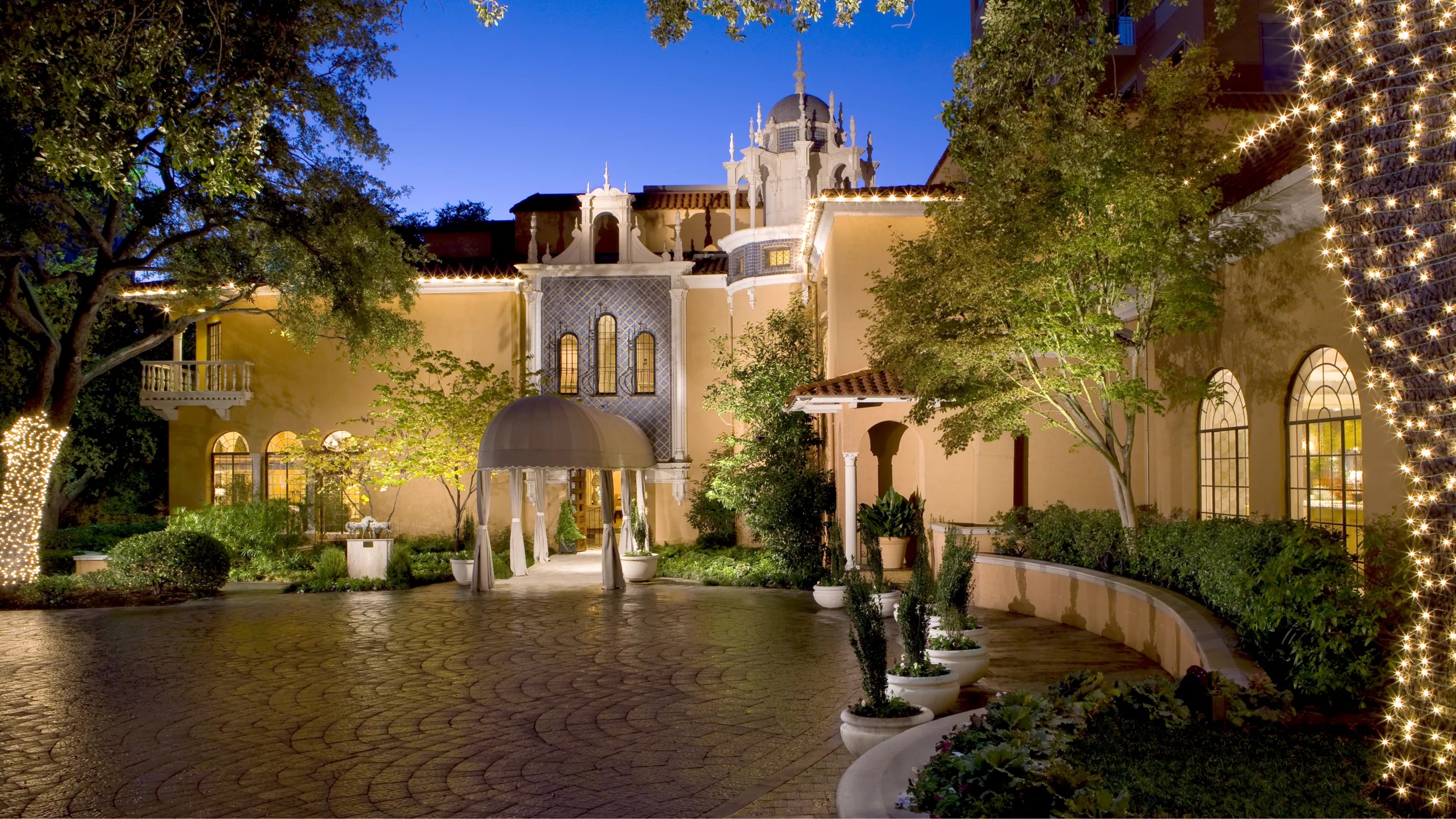
Rosewood Mansion on Turtle Creek is the founding property of the Rosewood brand — the 1925 Italian Renaissance mansion in Dallas's Turtle Creek neighbourhood whose 1980 conversion to a luxury hotel by Caroline Rose Hunt established both the operating philosophy and the design language that the global Rosewood collection has carried forward across forty-five years and dozens of subsequent properties. To stay at the Mansion is to stay at the property where the Rosewood "Sense of Place" approach to luxury hospitality was first articulated, where the celebrated chef Dean Fearing made Texan cuisine a serious culinary category, and where the Dallas social and political establishment has held its most significant gatherings since the Reagan administration. For wider context on the Rosewood collection, see our Rosewood Hotels guide and the Best Luxury Hotels in the United States guide.
The Setting: Turtle Creek and the Origin of Rosewood
The hotel occupies the Sheppard King mansion — a 1925 Italian Renaissance residence built by the Texas cotton magnate Sheppard W. King for his wife Annette in the Turtle Creek neighbourhood, then the most fashionable address in Dallas and now the city's most architecturally significant residential corridor. The original structure included carved fireplaces from European castles, intricately worked stone exteriors imported from Italian quarries, and a hand-painted ceiling in the principal salon that has been continuously preserved. Caroline Rose Hunt — the daughter of Texas oilman H.L. Hunt and the founder of the Rosewood Hotels brand — purchased the mansion in 1979 and converted it to the original Mansion on Turtle Creek hotel, which opened in 1980 as the first property in what would become the Rosewood global collection.
The conversion preserved the original 1925 mansion's principal salons (now the hotel's restaurant and public spaces) and added a residential-scale guest room wing connected to the original building by an enclosed corridor. The architectural strategy — preserve the heritage building as the public-space anchor; build the guest accommodation in a separate, more modern wing — has become the standard approach for the Rosewood collection's heritage hotel conversions globally (Hôtel de Crillon Paris, Rosewood Hotel Georgia Vancouver, Rosewood Castiglion del Bosco Tuscany all follow variants of this Mansion-originated template).
The Rooms: 142 Across Mansion and Wing
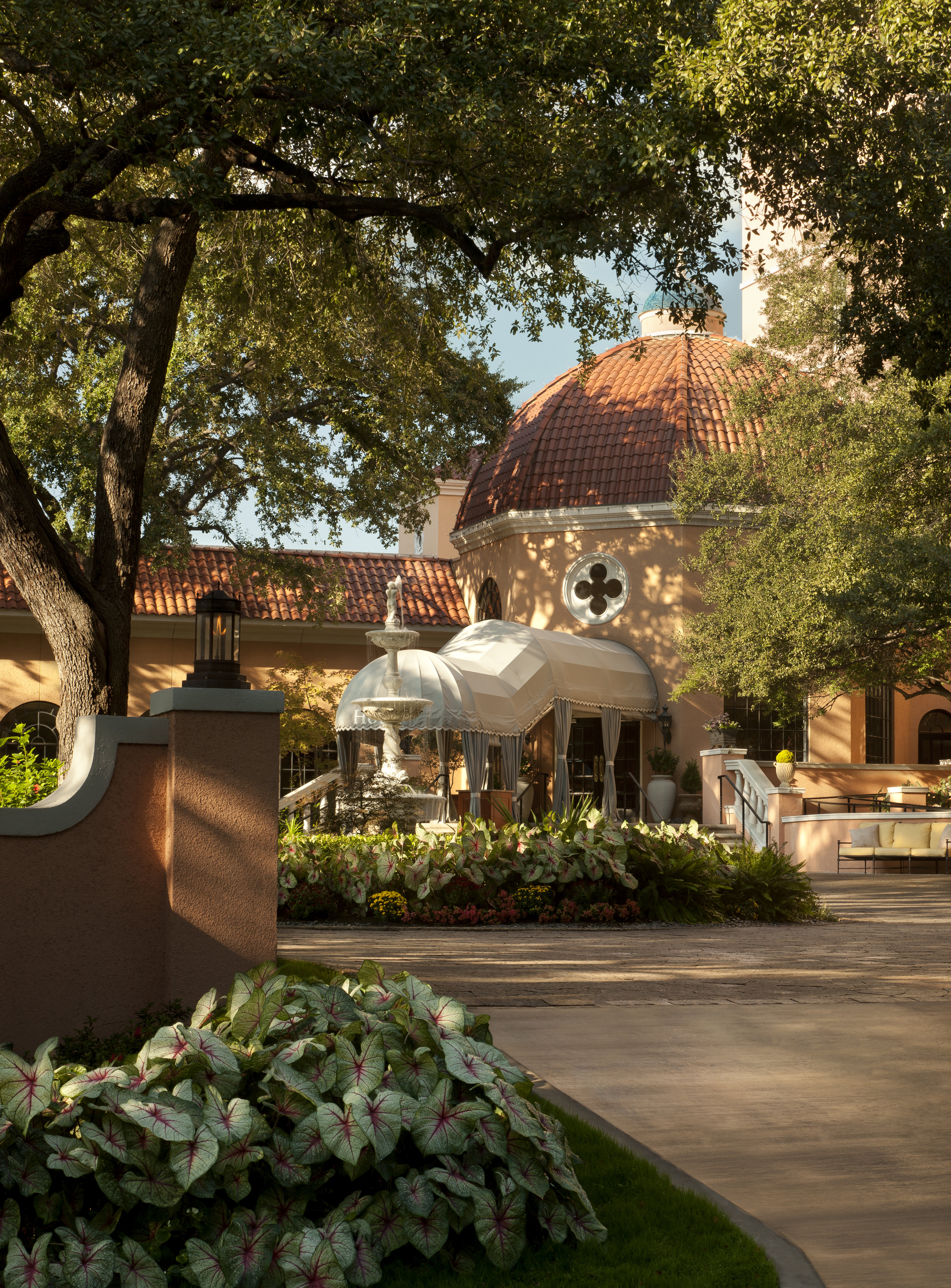
The hotel operates 142 rooms and suites across the original mansion and the guest wing extension. The room categories reflect the architectural division: the Premier and Premier Plus rooms in the guest wing (the contemporary luxury accommodations); the Mansion Suites in the original 1925 building (the heritage accommodation experience); and the Presidential Suite at the top tier.
Premier Rooms (the entry-level luxury accommodation)
The Premier Rooms — at 350 sq ft, in the guest wing — are the hotel's standard accommodation. The contemporary luxury specification includes the Frette linens, the Penhaligon's bath products, the dedicated minibar arrangement, and the residential-style bathroom with both walk-in shower and soaking tub. The room views range from courtyard (interior wing-facing) to Turtle Creek (the most desirable orientation, looking across to the protected creek-side parkland).
Premier Plus and Junior Suites (the upgraded configurations)
The Premier Plus Rooms add additional square footage and the larger bathroom configuration. The Junior Suites — at 450 sq ft — add the seating area and dining configuration that the longer stay requires.
Mansion Suites (the heritage experience)
The Mansion Suites are the hotel's most distinctive accommodation: 6 suites located within the original 1925 mansion building, each preserving the original architectural details (the carved fireplaces, the imported stone window surrounds, the hand-painted ceilings), and each individually themed and furnished. The Mansion Suite at the Rosewood is the booking decision for the traveler whose primary motivation is the property's heritage — these rooms cannot be replicated by the Premier or Junior Suites however well-appointed those contemporary accommodations may be.
The Presidential Suite (the top-tier accommodation)
The Presidential Suite — the hotel's flagship accommodation — combines two adjacent suites in the original mansion building with the most generous architectural footprint and the strongest preservation of the 1925 building's original interior detail. The suite is the booking that has hosted American presidents, visiting heads of state, and the Dallas establishment's most significant private events since the early 1980s.
The Mansion Restaurant: Where Texas Fine Dining Was Defined
The Mansion Restaurant — in the original 1925 mansion's principal salon, where the hand-painted ceiling and the European-imported fireplace remain in continuous operation as the dining room — is the most architecturally significant fine dining room in Dallas, and historically the most important. Dean Fearing, the celebrated Texas chef who joined the Mansion in 1985 and remained for two decades, made the Mansion Restaurant the first Dallas restaurant to receive sustained national critical attention; his Tortilla Soup, Cherry Cheesecake Tamales, and contemporary interpretation of Texas regional cuisine became the template that subsequent Texas chefs have built on.
The contemporary menu under the current chef continues the Mansion's commitment to elevated Texas regional cuisine — locally sourced beef from Texas ranches, Gulf seafood, the local agricultural sourcing that the Texas culinary movement has expanded across the past two decades. The wine programme emphasises Texas wines (the increasingly serious Texas Hill Country and High Plains wine regions are now producing internationally competitive bottles), French classical references, and the substantial American depth that the Texas market specifically values.
Sense of Place: The Operating Philosophy
"A Sense of Place" — the operational philosophy that the Mansion on Turtle Creek originated and that the Rosewood global brand has carried forward — holds that each hotel should reflect, in its design, its food and beverage program, its art selection, and its guest service practices, the specific cultural and architectural identity of its location. At the Mansion, this means: the Texas culinary identity of the restaurant; the Western-art collection in the public spaces (the Frederic Remington bronzes, the contemporary Texas painters, the regional photography); the private cigar program with the Texas-tradition smoking room; and the staff's deep familiarity with Dallas's specific social geography (which restaurant in town the Mansion concierge will recommend for what occasion is a question whose answer reflects forty-five years of accumulated relationship-building in the city).
This philosophy is most distinctively expressed in the Mansion's Texas-specific service culture: the staff training emphasises the hospitality traditions that Texan culture has elevated to art form (the warmth, the generosity of welcome, the specific interpretation of "service" that Southern American hospitality represents). The result is a luxury hotel experience that is unmistakably Texan rather than internationally generic — the distinction that makes the Mansion a destination for travelers who specifically want the Texas-luxury experience rather than the global-luxury default.
The Spa and Pool
The Sense of Touch Spa is the hotel's dedicated wellness programme — a contemporary spa facility within the guest wing offering treatments calibrated to the Texas climate and the residential-scale property's quieter wellness rhythm. The signature treatments include the Texas Wildflower Honey wrap, the Spirits of Texas treatment (drawing on Texan distillery traditions for the body therapy ingredients), and the conventional global luxury spa treatments that travelers expect.
The outdoor pool — in the property's central courtyard between the original mansion and the guest wing — is the principal social amenity for the hotel's daytime experience. The pool is heated for year-round use; the surrounding garden and the cabana service create the most architecturally complete poolside environment of any hotel in Dallas.
The Position in the Dallas Luxury Market
Dallas's luxury hotel market includes The Joule (in the Downtown arts district, with the Adam Tihany-designed contemporary aesthetic), the Crescent Hotel (the Caroline Rose Hunt-developed sister property to the Mansion), the Hôtel Saint Augustine (the boutique luxury option in the design district), and the global chain luxury properties (Four Seasons Las Colinas, Ritz-Carlton Dallas, Hilton Anatole). The Mansion on Turtle Creek's position among these is specific: the only luxury hotel in Dallas occupying a heritage-designated 1925 building, the only property with the Rosewood "Sense of Place" operational philosophy applied at the founding-property scale, and the only luxury hotel in the city whose restaurant has the historical importance of having defined Texas fine dining as a category.
The Rosewood Elite Booking Through WhataHotel!
Rosewood Mansion on Turtle Creek books through Rosewood Elite — the Rosewood brand's preferred partner program, accessed via WhataHotel!'s direct Rosewood Elite relationship. The benefits at this property include daily breakfast for two at the Mansion Restaurant or in-room (the Texas-specific breakfast menu is among the most generous luxury hotel breakfast configurations available in the United States), $100 USD hotel credit per stay, upgrade priority at check-in (the Premier Room to Junior Suite or Junior Suite to Mansion Suite upgrades are the primary value levers), early check-in and late checkout on priority basis, and a personalised welcome amenity. The Rosewood Elite rate matches the rate on rosewoodhotels.com directly.
When to Visit
Dallas's most pleasant weather — moderate temperatures, low humidity, the clearest skies of the year — runs from late September through early May, with the spring (March–May) and autumn (October–November) shoulder months delivering the strongest combination of weather and operational quality. The summer months (June–August) are characterised by the Texas heat (regular 100°F+ daytime temperatures), which makes the hotel's interior and pool experience the most welcome contrast but the outdoor exploration of Dallas the most uncomfortable. Winter (December–February) is mild by national standards but produces the lowest hotel rates of the year and the strongest availability for the Mansion's most desirable accommodations.
For the traveler whose primary purpose at the Mansion is the cultural calendar rather than the weather, the Texas State Fair (late September through mid-October), the Dallas Symphony season (September through May), and the Dallas Cowboys home games (September through January) all create specific weeks when the property's guest mix shifts toward visiting Texan families and the social texture of the property is at its most complete.